Food factory service tie-ins: prove readiness before shutdown
A practical readiness plan for drainage and utility tie-ins at a live food factory, including isolation, rollback, testing and return to service.
By Eddie Lyons, Construction director
Generated by your browser's built-in AI. May not be fully accurate.
A service tie-in at a live food factory is not ready because the new pipe or cable has reached the old building. It is ready when the existing service has been proved, the isolation can be controlled, the new work has been tested, the rollback point is understood and the operator knows exactly how the system will return to production.
That is a narrower problem than planning the whole extension. The question here is whether one drainage, water, power, data, refrigeration or process-service connection can be completed inside an agreed window without leaving the factory with an unsafe system or an unplanned production loss.
The operator owns the operating controls. The construction team owns the buildability and evidence for its work. The tie-in plan has to connect those two responsibilities before the shutdown starts.
Start with one tie-in register
List every connection rather than hiding them inside the construction programme. Each entry should identify:
- the live service and what depends on it;
- the proposed connection point and how it was verified;
- the service owner and person authorised to isolate it;
- the permitted outage window;
- the new work that must be complete before isolation;
- the test and acceptance evidence required;
- any temporary supply, bypass or over-pumping arrangement;
- the last safe rollback point;
- the person authorised to return the system to service.
This register separates a genuine tie-in from work that only looks similar on a drawing. A new surface-water connection may need flow control and pollution checks. A foul or process drainage connection may affect cleaning or production. Power and data connections may support alarms, refrigeration or access systems as well as the obvious equipment.
Do not assume that a shutdown window makes every dependent activity available. Production, hygiene, maintenance, engineering, IT, fire safety and external utility teams may each control part of the job.
Prove the existing service before the window
The highest-risk discovery is often left until the old system is open: the pipe is a different material, the valve does not isolate, the chamber invert is wrong, the cable route is not where the drawing shows, or the available connection is already serving something unexpected.
Use records as a starting point, then verify what the work will physically meet. Depending on the service and risk, that may involve surveys, tracing, trial holes, CCTV, flow checks, valve proving, test isolation or specialist inspection. The method and competence must suit the system.
For buried services, follow the safe planning and locating sequence before excavation. Our underground services safe digging guide explains the core steps and limitations of locating information.
Record uncertainty rather than turning it into an assumption. If the connection cannot be exposed or proved early, the shutdown plan needs time and materials for more than one credible condition.
Put the operator’s controls into the work pack
Food safety controls belong to the factory’s own system. The Food Standards Agency’s MyHACCP prerequisite guidance asks businesses to consider premises layout, neighbouring activities, contamination routes, cleaning and documented procedures. The construction team should receive the controls that apply to the tie-in area rather than invent a parallel hygiene process.
The work pack should state how the area is separated, who can enter, what must be cleaned, how tools and materials move, what happens to waste water, and who releases the area afterwards. If the tie-in affects a controlled production zone, the operator should define the monitoring and acceptance evidence.
Some tie-ins also require a permit-to-work system. HSE describes a permit to work as a formal control for specified work, time and safe conditions. It may be appropriate for work involving electrical or mechanical isolation, cutting into hazardous pipework or other high-risk activities. A permit records authority and precautions, but it does not replace risk assessment, a method statement or physical isolation.
Finish and test the new side first
Build as much as practicable without disturbing the live service. The exact readiness evidence depends on the system, but the principle is consistent:
- approve the connection detail and materials;
- complete the new route up to a controlled tie-in point;
- inspect work that will become concealed;
- test the new installation as far as the arrangement allows;
- resolve defects before the outage clock starts;
- place the correct labour, tools, spares and test equipment at the workface.
For drainage, this can include line and level records, chamber details, cleaning, test results and confirmation that temporary pumping will not send contaminated water to the wrong system. For utilities, the evidence and authorised specialists will differ.
The government’s pollution prevention guidance for businesses explains why surface-water, foul and trade-effluent routes must be distinguished. A nearby gully is not an acceptable default destination for construction water or a temporary bypass.
Rehearse the sequence, not just the meeting
A useful rehearsal follows the physical job from arrival to handback. Walk the route with the people who will isolate, connect, test and restart the service.
Check access, lighting, barriers, lifting points, tools, parts, test points, communications and waste handling. Confirm who holds keys and permits. Check that the proposed isolation is labelled on the real system, not only on a marked-up drawing.
The rehearsal should expose dependencies. If a valve key is held by another shift, a panel cannot be reached while a delivery is on the dock, or the CCTV unit cannot pass the proposed bend, the programme needs to know before shutdown night.
Set a clear go or no-go gate
Do not start isolation because the calendar says the window has opened. Use a short evidence gate with named acceptance.
Typical questions include:
- Is the live service and isolation boundary positively identified?
- Is the new work complete and accepted to the agreed point?
- Are permits, method statements and operator controls current?
- Are temporary supplies or bypasses installed and proved where required?
- Are the correct people, materials, tools and test equipment present?
- Is the work area available for the full window?
- Is the rollback method still achievable within the remaining time?
- Does the person controlling operations authorise the start?
The answers should be recorded. A verbal “we should be fine” is not useful evidence when several teams are handing control to one another.
Define rollback before dismantling anything
Rollback is not simply putting the old part back. It is a planned route to a safe operating condition if the connection, test or restart fails.
State what can be restored, what temporary parts are held, how long restoration takes and which checks are required before production can resume. Mark the point after which rollback is no longer possible inside the window. That point should trigger a fresh decision, not be passed unnoticed.
HSE’s maintenance guidance emphasises planned work, safe systems, isolation and preventing inadvertent reconnection. The same discipline applies when construction work cuts into operating equipment or services.
Return the service through a controlled handback
Completion of the physical joint is only one step. The work pack should define:
- inspection of the connection and surrounding work;
- pressure, leakage, electrical, flow or functional tests appropriate to the service;
- removal of temporary isolation, bypasses and controls in the agreed order;
- cleaning and hygiene release where applicable;
- confirmation that alarms, pumps, controls and dependent equipment respond correctly;
- updated labels, marked-up drawings and test records;
- formal transfer back to the operating authority.
Watch the system during the agreed proving period. A drainage connection can be watertight but routed incorrectly. A utility can energise but leave a control or alarm unavailable. The acceptance check needs to reflect what production actually requires.
Price the readiness work, not only the connection
A tender line for “connect to existing” leaves every contractor to guess the survey, outage, temporary works and testing scope. Issue the tie-in register, available records, operating restrictions, required surveys, connection details, test criteria, temporary-service assumptions, permit responsibilities and handback process.
That information makes the comparison fairer and puts unresolved conditions in view. It also gives the programme a real list of activities to finish before the isolation begins.
Rospower Projects delivers food facility groundworks including drainage, utilities, slabs and external works beside operating facilities. If a project has fixed shutdown dates but the tie-in evidence is still incomplete, send the service information through work with us or request a proposal. We can help turn the connection into a buildable readiness sequence.
Eddie Lyons is the construction director at Rospower Projects. Read more about the team on our about page or contact Rospower Projects to discuss a live food factory tie-in.
Related articles
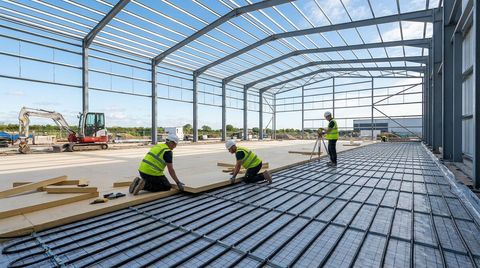
Cold storage foundations: stopping frost heave before it lifts the floor
A frozen store slab held below zero freezes the ground beneath it and heaves. Why cold storage foundations need under-slab heating, not just insulation.
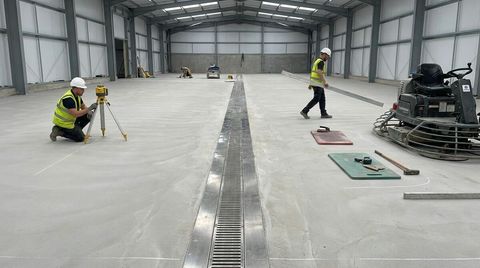
Floor slabs and falls for food production: drainage that passes audit
In a food factory the floor is a drainage surface, not a flat slab. How to set falls, channels and finishes so a BRCGS auditor passes the floor first time.
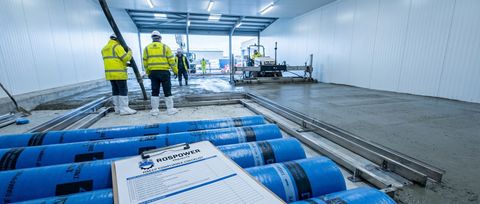
Groundworks for food manufacturing: what makes it different?
Food-grade drainage, BRC-compliant slabs, cold storage foundations, and contamination protocols explained for UK groundworks contractors.