Concrete pour planning: access, pump and washout
Coordinate a concrete pour around site access, pump setup, the controlled mix order, finishing resources and a lawful washout plan before the wagon arrives.
By Connor Lyons, Commercial director, MRICS
Generated by your browser's built-in AI. May not be fully accurate.
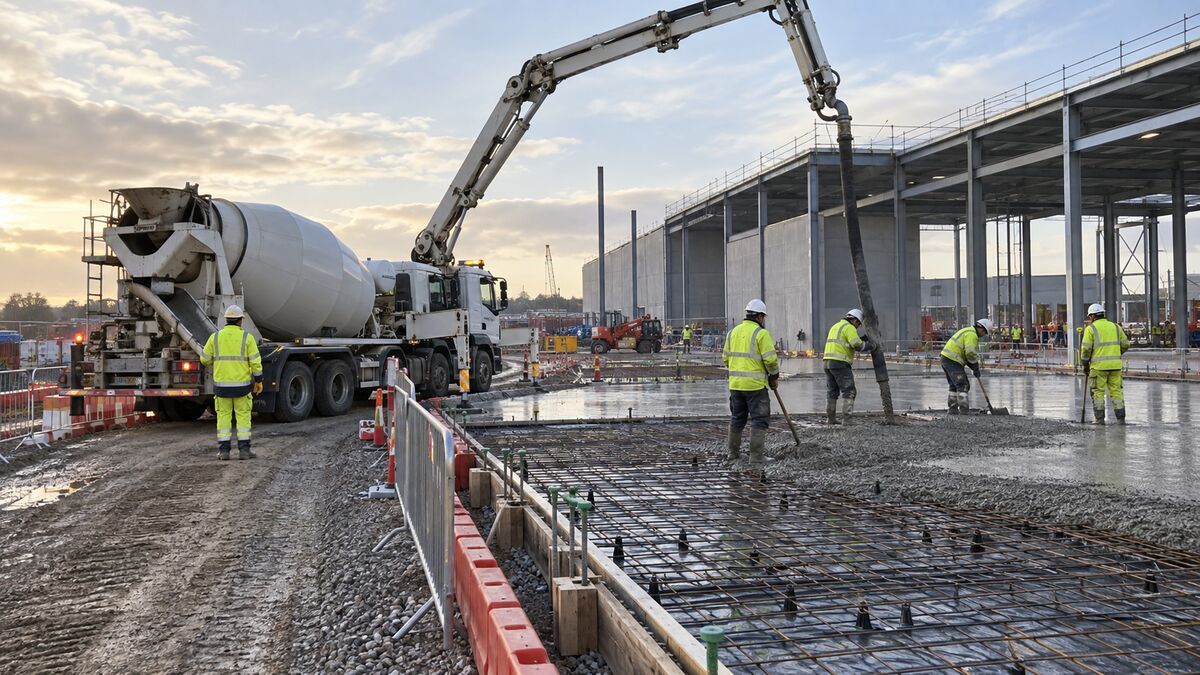
A concrete pour is a short operation with a long list of dependencies. The mix order, receiving area, pump position, vehicle route, crew, finishing sequence and washout arrangements all need to work together. If any one of those is unresolved when the first wagon arrives, the site may face waiting, rework or pressure to make a decision without the right person present.
This is a planning guide, not a concrete mix specification, pump method statement or permission to discharge wash water. The approved design, order, method statement, supplier instructions and project quality plan remain in control.
Confirm the pour and the information behind it
Define the area and sequence using a current drawing or pour plan. Check that dimensions, interfaces, joints, reinforcement, cast-ins, access openings and the nominated placing method agree with the project information. The person responsible for design or inspection should resolve discrepancies before the pour is released. Do not use a quantity estimate or a delivery slot as a substitute for that review.
Confirm the exact concrete order against the approved project specification and identify who can authorise a change. The concrete specification guide offers general starting-point outputs, not a substitute for the project’s controlled design and specification. The volume calculator is only an estimate based on the dimensions entered. Neither confirms that an area is ready to pour.
Plan access as part of the work method
Agree the route from gate to discharge point, including vehicle height or width restrictions, turning, reversing, queuing, pedestrian segregation and any shared access. Tell the supplier about the location and unloading arrangement before the booking is confirmed. If several wagons or another delivery use the same route, put their sequence into the same site coordination plan. The site delivery slot planner can record declared bookings, but it does not assess vehicle suitability or authorise a route.
If a pump is used, confirm its position, set-up area, pipeline route, exclusion arrangements and the roles of the people involved with the pumping contractor. The Concrete Society’s safe pumping guidance highlights that concrete in pump pipelines can be under considerable pressure and that falsework may need to account for vibration and additional loading where a line rests on it. Site-specific plant, pipeline and support decisions belong to the competent people planning the operation.
Set a release check for the receiving area
Before calling the first wagon forward, confirm that the area is accessible and ready under the project’s agreed inspection process. The check may reference formwork or edge details, reinforcement, cover, cast-ins, joints, cleanliness, survey levels, weather controls and the person who releases the pour. The project’s inspection and test plan (ITP) or pre-pour form should define the applicable requirements; there is no universal checklist or acceptance value for every slab.
Make sure the crew, tools, lighting and finishing resources match the planned sequence. Identify who can stop or pause the operation if the order, access, weather or site condition differs from the plan. A contingency can be as simple as named contacts and an agreed hold point, but it should not rely on somebody trying to find the responsible designer after the concrete is on site.
Decide the washout route before the pour
Identify where concrete equipment and pump lines will be washed, what containment will be used, who supplies it and who manages the resulting water and solids. Do not assume that a convenient gully, drain, excavation or patch of ground is a suitable washout point.
For England, read the Environment Agency’s RPS 287 on water containing concrete before relying on its limited enforcement position.
The Agency states that RPS 287 does not change the legal requirement for a waste-operation environmental permit. It will not normally enforce that requirement where the activity fits the RPS and the operator meets every condition, including the pollution and harm restrictions.
Ask the environmental lead to confirm whether the proposed operation qualifies. Separately establish the lawful route for any discharge or off-site disposal, with the applicable permits or consents. Use the correct regulator’s rules outside England.
Under RPS 287, you cannot use either treated or untreated concrete wastewater for dust suppression. Ask the environmental lead to verify the full conditions and the separate lawful discharge or disposal route; settling alone does not grant permission.
At our source check on 19 October 2026, the Agency specified a review by 30 June 2027. Check again before relying on it: the Agency can amend or withdraw the position earlier, and a review date is not a guaranteed period of permission.
Brief the people who can hold the pour
Before the booking, write down who decides what happens if a dependency fails. Use your project roles and approval process, rather than treating the example below as an allocation of legal duties.
| Question for the briefing | Decision or record to identify |
|---|---|
| Has the receiving area been released? | Named project reviewer and the relevant pre-pour record |
| Can the pump set up as planned? | Pumping contractor’s setup requirements and the person confirming site readiness |
| What if a wagon cannot enter? | Site logistics contact, supplier contact and agreed holding arrangements |
| What if the ticket differs from the order? | Authorised technical contact and the discrepancy procedure before discharge |
| Where does wash water go? | Environmental lead, containment owner and the verified disposal or use route |
In a fictional briefing, the supervisor discovers that another delivery will block the only pump access. The logistics coordinator must resolve the clash with the supplier and site team before confirming the pour sequence.
Keep the revised booking with the pour plan. You still need the technical and pre-pour checks after resolving an access clash; an available slot alone cannot release the work.
Close the record while the details are current
After the pour, connect delivery tickets to the order, pour area and placement sequence. Add the records required by the project specification, including any test results, weather or interruption notes, deviations, photographs and review decisions. Keep an issue or corrective action linked to the affected location and the person who closed it.
Use the separate concrete delivery ticket checks guide for the load-by-load receiving process. Keep that check distinct from the earlier decision to release the pour area.
The purpose is traceability, not paperwork volume. A later reviewer should be able to see what was placed, where it went, which controlled information applied and how any discrepancy was resolved. Do not rewrite a ticket or test result to make it appear that a discrepancy never occurred.
Rospower Projects coordinates concrete, drainage and external works with the surrounding groundworks sequence. To discuss a commercial or industrial pour, see our construction service or share the project brief.
Connor Lyons is the commercial director at Rospower Projects and a chartered quantity surveyor. Read more about the team on our about page or contact Rospower Projects to discuss a groundworks package.
Related articles

Recycled aggregate: evidence to check before use
Check the product, intended use, delivery record and waste-status evidence for recycled aggregate before it is accepted into a groundworks package.
From demolition to groundworks: agree the release point
Plan the demolition-to-groundworks handover: record residual structures, services, surveys, access, open risks, evidence and release authority.

Piling package tender: define the scope before pricing
Set out ground information, design inputs, access, platform duties, testing evidence and return details before piling tender bids are compared.