Piling package tender: define the scope before pricing
Set out ground information, design inputs, access, platform duties, testing evidence and return details before piling tender bids are compared.
By Connor Lyons, Commercial director, MRICS
Generated by your browser's built-in AI. May not be fully accurate.
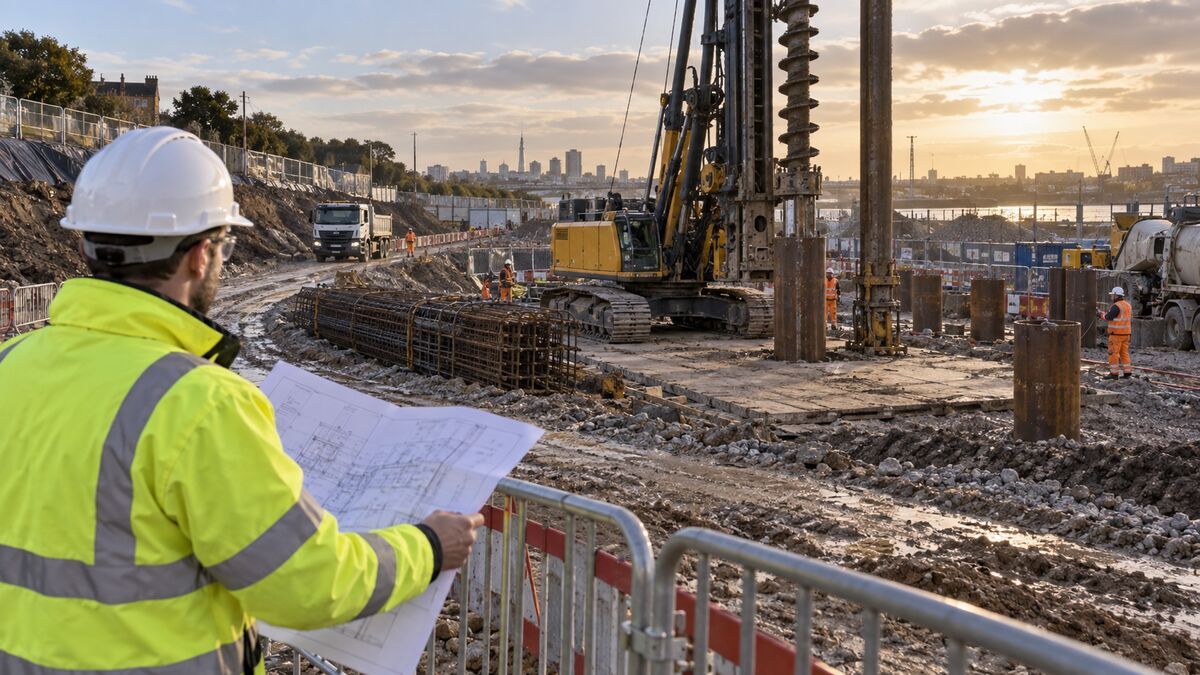
A piling tender becomes difficult to compare when each specialist has to fill gaps in the brief with different assumptions. One bidder may include a working platform, testing and pile-head treatment; another may price only the installation described on a drawing. The headline prices then look comparable while the packages are not.
The useful fix is to define the information, interfaces and return format before bids are requested. This is a client-side briefing guide, not a foundation design, pile selection tool or tender award recommendation. The structural and geotechnical designers remain responsible for the design information they issue.
Start with the decision the package must support
Describe the building or infrastructure element the piling supports and identify the work boundary. State the locations, phases, interfaces and required completion points shown in the current project information. If a layout or design is still developing, mark it as provisional and explain what bidders should price, qualify or leave open.
Avoid asking a piling contractor to infer a final design from incomplete architectural information. Identify the appointed designer, the design stage and the information that will be issued before construction. If design by the specialist is part of the procurement, say so explicitly and set out the required design deliverables, review process and responsibility boundary.
Issue the ground information with its limits
Provide the available ground investigation, factual and interpretative reports, contamination information, groundwater observations, utility records and site history that are relevant to the work. Include the report references and revisions. Make clear what was investigated, where access was unavailable, which areas were not tested and what uncertainty remains.
Do not summarise a ground report as if it guarantees conditions across the whole site. The tender team needs the source documents and their stated limitations, not an informal promise that the ground is uniform. HSE’s guidance on planning construction work says relevant site information, including unusual ground conditions and underground services, should be considered before tenders are submitted.
Where a contractor is expected to propose a solution, state which design inputs are fixed and which are still subject to confirmation. Do not substitute a tender assumption for missing investigation or a designer’s decision.
Name the design inputs and interfaces
List the controlled information that the piling design or installation is expected to use. Depending on the project, this may include the foundation layout, structural load information supplied by the structural engineer, setting-out control, pile schedule, pile-cap interfaces, tolerances and connection details. Reference the exact drawing or document revision rather than writing “latest drawings”.
Use an interface schedule to make responsibility visible. For example, identify who provides the pile design, who reviews it, who designs the piling platform, who sets out the works, who tests, who records as-built positions and who completes pile trimming or pile-cap preparation. If an item is not in the package, state who owns it instead of leaving a silent gap.
Treat the working platform as a designed interface
A piling rig operates from a platform whose design and condition must match its intended use. The HSE’s temporary-works guidance includes working platforms for plant among temporary works and says temporary works need planning and management. Confirm the project process for design, checking, construction, inspection, maintenance, changes and release of the platform. Record who supplies each action and which controlled evidence is expected.
Do not invent a bearing pressure, platform thickness or generic acceptance value in the tender brief. Those inputs depend on the actual plant, loads, ground and design. Provide the information requested by the competent temporary-works designer and agree how changes in rig, location or platform condition will be reviewed before use.
Make access and sequence priceable
Give bidders the site constraints that affect mobilisation and production: access gates, turning and delivery routes, overhead or buried services, working-hour restrictions, nearby operations, occupied areas, noise or vibration constraints already identified by the project, and planned handovers between phases. Mark any temporary access or working area that is not yet available.
Ask for a programme with the bidder’s assumptions stated. It should identify mobilisation, installation sequence, hold points, information required from others, testing, pile-head work and demobilisation. A calendar duration without these dependencies is difficult to coordinate with excavation, drainage, pile caps and the building programme.
Specify the evidence and tender return
The project specification and design determine the required testing and acceptance criteria. Reference them directly. Ask bidders to identify their proposed testing approach, any departures or qualifications, the records they will provide and when those records will be issued. Do not insert a universal test frequency or pass value unless it is taken from the controlled project requirement.
Request a structured return that separates the base scope from options and exclusions. A useful response can include:
- price breakdown by phase, area or pile group;
- design and temporary-works responsibilities;
- assumptions about ground, access and supplied information;
- programme, resource and mobilisation assumptions;
- testing, records and close-out deliverables;
- exclusions, qualifications and information needed before appointment.
Then compare the returns against one issued scope. Log clarifications and issue the same information to every bidder where procurement rules require it. Do not treat an unexplained low price as evidence that all bidders have priced the same work.
Example: compare the same platform scope
Suppose you receive two fictional bids. Bidder A includes platform maintenance but excludes its design. Bidder B includes design but assumes that another contractor maintains the platform. You cannot compare those totals as equivalent scopes.
Ask each bidder to complete the same short return:
| Interface | What you ask the bidder to confirm |
|---|---|
| Rig and platform inputs | Identify the proposed rig and who supplies its load information to the platform designer |
| Platform design | Name the responsible designer and the checking deliverable included in the price |
| Construction and release | Identify who builds the platform and who records the agreed pre-use checks |
| Maintenance and changes | State who inspects and maintains it, and how a different rig or damaged area is referred for review |
| Close-out | Identify who removes temporary material or leaves it for a specified later use |
You can then price the remaining gaps explicitly. Keep technical suitability with the appointed designers; a completed commercial return does not verify bearing capacity or permit the rig to start work.
Close the brief before the bid deadline
Before issue, check that every drawing has a revision, every interface has an owner, the available ground information is included, temporary-works responsibilities are visible and the requested return format is consistent. Keep unanswered decisions on a short schedule with an owner and target date. If an answer changes the scope, distribute it through the agreed tender process so each bidder is working from the same basis.
Rospower Projects coordinates piling and groundworks interfaces with the wider construction sequence. To discuss a project package or share its current information, see our piling service or request a proposal.
Connor Lyons is the commercial director at Rospower Projects and a chartered quantity surveyor. Read more about the team on our about page or contact Rospower Projects to discuss a groundworks package.
Related articles
Commercial estate civils: build a maintenance budget from evidence
Turn external asset condition records into scoped maintenance packages, cost allowances and review dates without relying on invented repair rates.
Brownfield ground investigation: write the questions before the scope
Commission a brownfield investigation around the design and contamination decisions it must support, with clear outputs, access limits and review points.
Warehouse groundworks: who owns each package interface?
Build a warehouse package responsibility matrix for steelwork, drainage, thresholds and utilities before placing separate or combined orders.