Commercial estate civils: build a maintenance budget from evidence
Turn external asset condition records into scoped maintenance packages, cost allowances and review dates without relying on invented repair rates.
By Connor Lyons, Commercial director, MRICS
Generated by your browser's built-in AI. May not be fully accurate.
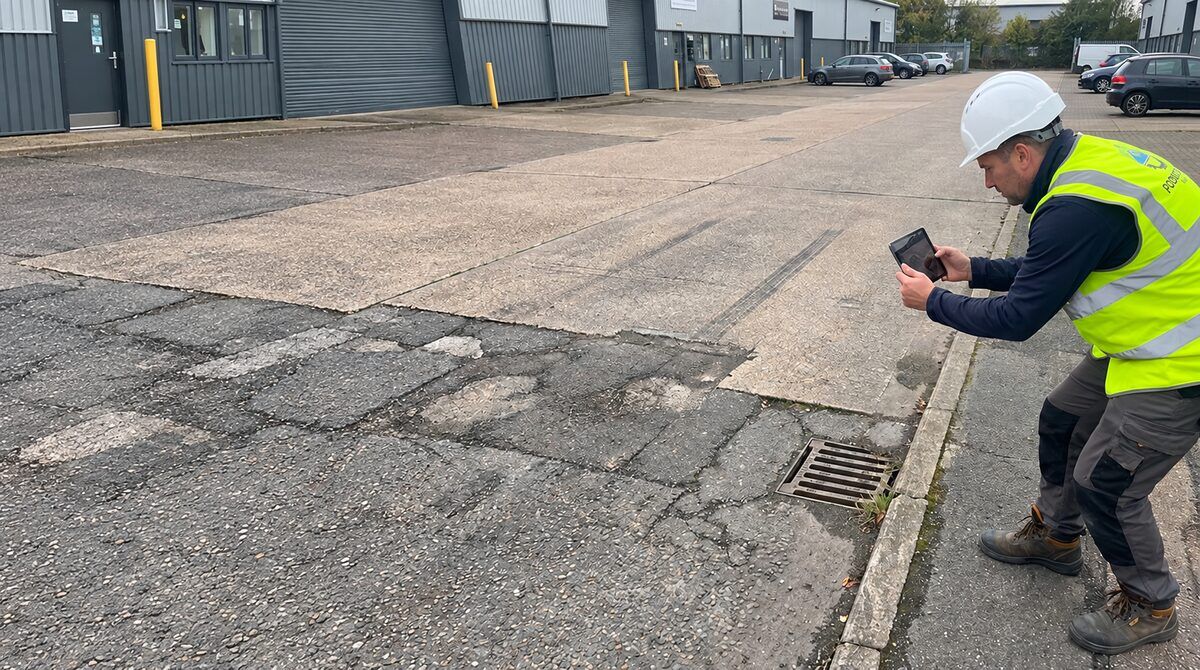
“Car park repairs” is not enough detail for a maintenance budget. It does not identify the area, explain the defect, say what work is allowed for or show whether the figure includes keeping the estate open. The first useful step is to turn that heading into an evidence-backed work package.
This guide covers external civil assets on a commercial estate: roads, parking areas, kerbs, drainage and pedestrian routes. Its output is a budget register with a stated basis for each allowance. It is not a repair design, a contractor framework, a service-charge assessment or accounting advice.
Give each asset a location and an evidence trail
Start with a marked plan and a consistent reference system. “Gully G04 beside unit 6” can be connected to a photograph, survey and quotation. “Drain near the warehouse” may mean different things to the managing agent, tenant and contractor.
Separate observations from explanations. A photograph may show ponding or a broken surface, but it does not establish the buried cause. Record the date, observed condition, inspection limits and the further investigation needed. Keep inaccessible or uninspected areas visible in the register instead of treating them as sound.
The RICS planned preventative maintenance standard covers instruction, survey preparation, inspection and reporting, including schedules and cost data for built assets. It is a useful basis for briefing a competent building surveyor. This article’s register is a simpler external-works budgeting aid, not a substitute for that survey or its report.
Ask who owns and maintains each asset. A shared access road, an adopted sewer and a tenant’s loading area may involve different parties. An entry in the estate plan does not establish the landlord’s responsibility or a right to recover the cost through a lease.
Separate safety action from annual budget priority
Do not wait for the next budget meeting to refer a potentially unsafe condition to the responsible site manager. Immediate risk controls and a planned permanent repair are separate decisions. Record both, with the person responsible for confirming what can remain in use.
HSE’s driving-surfaces guidance highlights suitable surfaces, drainage, grip and maintenance for workplace traffic routes. Use a competent assessment of the actual site conditions rather than a spreadsheet score to decide whether restrictions or urgent work are needed.
For budget discussion, group the remaining entries by the decision required:
- Investigate: the cause or extent is not yet established, so price the information-gathering task first.
- Plan a repair: there is enough evidence to define the work, subject to design and approvals where needed.
- Monitor: a competent assessment supports continued use with stated inspection or review arrangements.
- Renew or improve: a defined replacement or changed operational requirement needs its own options and scope.
These are working categories, not engineering condition grades. Add the reason for the category and who reviewed it. “Monitor” without a trigger or review date is an unresolved entry, not a maintenance strategy.
Make the budget row explain its number
Use one row per work package rather than one row per photograph. Several observations may relate to a single repair; one large yard may need several distinct packages.
| Register field | What the budget reviewer needs |
|---|---|
| Asset and location | Plan reference and the limits of the proposed work |
| Evidence | Dated inspection, photographs, survey and known exclusions |
| Proposed task | Investigation, defined repair, renewal or monitoring activity |
| Quantity basis | Measured quantity, provisional quantity or scope awaiting survey |
| Cost basis | Dated quotation, consultant estimate or clearly labelled allowance |
| Operating constraints | Tenant access, delivery windows, segregation and temporary arrangements |
| Included and excluded costs | Surveys, design, mobilisation, disposal, reinstatement and other relevant items |
| Uncertainty | Unresolved cause, buried condition, approval or access dependency |
| Owner and next review | Person or role obtaining the missing information and the review date |
Keep a quote separate from a placeholder allowance. Record its validity period and assumptions, and state consistently whether figures include VAT. Ask the appropriate finance or property adviser how tax, accounting and lease recovery should be handled; a civils work description cannot answer those questions.
A worked example: budget the next justified step
Consider a fictional estate with repeated ponding near a loading entrance. There are photographs after rain, but no reliable drain plan. The budget currently says “replace yard drainage” with a round-number allowance.
Split the decision into two stages. The first package is a scoped survey: identify the affected area, trace the relevant drainage and report the findings and limitations. Record the quote and access assumptions for that task. Keep a separate provisional repair allowance if the budget process needs one, clearly stating that the repair scope is not yet established.
After the survey, replace or revise the provisional entry using the evidence. The required work might concern a local defect, maintenance, levels or a wider design issue. The budget has not proved any of those outcomes in advance. Its purpose is to show what is known, what will be purchased next and what could change.
Include the cost of working on an occupied estate
Ask the estimator or tenderer to identify temporary access, segregation, sequencing and tenant liaison assumptions. A price based on an empty yard cannot be compared fairly with one that maintains deliveries throughout the work.
Check for double counting when packages share mobilisation or temporary arrangements. Equally, do not erase those costs because a contractor may visit the estate for another job. Record any proposed saving as a dependency to confirm, not an achieved saving.
Where uncertainty needs a contingency or risk allowance, state the basis and avoid counting the same risk both inside the contractor’s price and again in the client allowance. There is no universal percentage in this guide. Ask the cost adviser to explain the treatment appropriate to the information available.
Review decisions, not just the total
A useful review updates changed quantities, new survey findings, quotation dates and the status of temporary controls. Preserve the previous basis so a higher or lower figure has an explanation.
Give each deferred package an owner and a review trigger, such as a stated inspection date, a tenant change or receipt of design information. Keep unresolved risks visible when funding is deferred. A smaller approved budget does not itself make an outstanding defect acceptable.
For a quotation from Rospower Projects, the most useful starting pack is the marked asset plan, current evidence, proposed work limits and operating constraints. Those documents make a civil works package priceable without pretending that every unknown has already been resolved.
Rospower Projects delivers civil engineering and groundworks for industrial and commercial sites. Contact us to discuss an evidence-backed external works brief.
Related articles
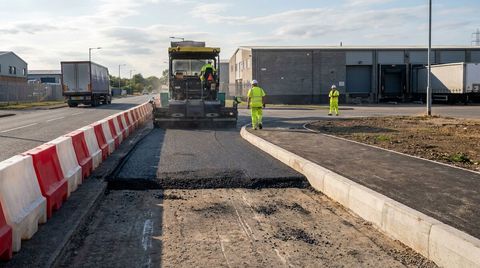
Kerbs before asphalt: the sequence that keeps a live site moving
Kerbs, drainage, asphalt and traffic management have to work as one sequence. Here is how a live yard keeps moving without damaging finished work.
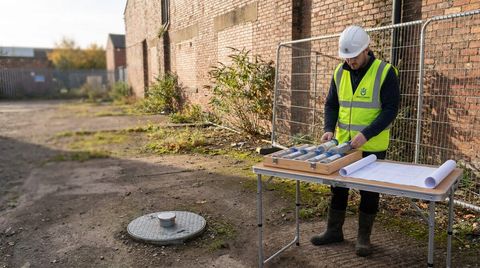
Brownfield ground investigation: write the questions before the scope
Commission a brownfield investigation around the design and contamination decisions it must support, with clear outputs, access limits and review points.
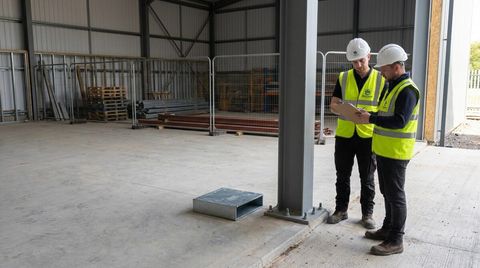
Warehouse groundworks: who owns each package interface?
Build a warehouse package responsibility matrix for steelwork, drainage, thresholds and utilities before placing separate or combined orders.