Excavated spoil: checks before it leaves site
An England-focused workflow for checking excavated material status, waste classification, destination acceptance, carrier authority and transfer records.
By Connor Lyons, Commercial director, MRICS
Generated by your browser's built-in AI. May not be fully accurate.
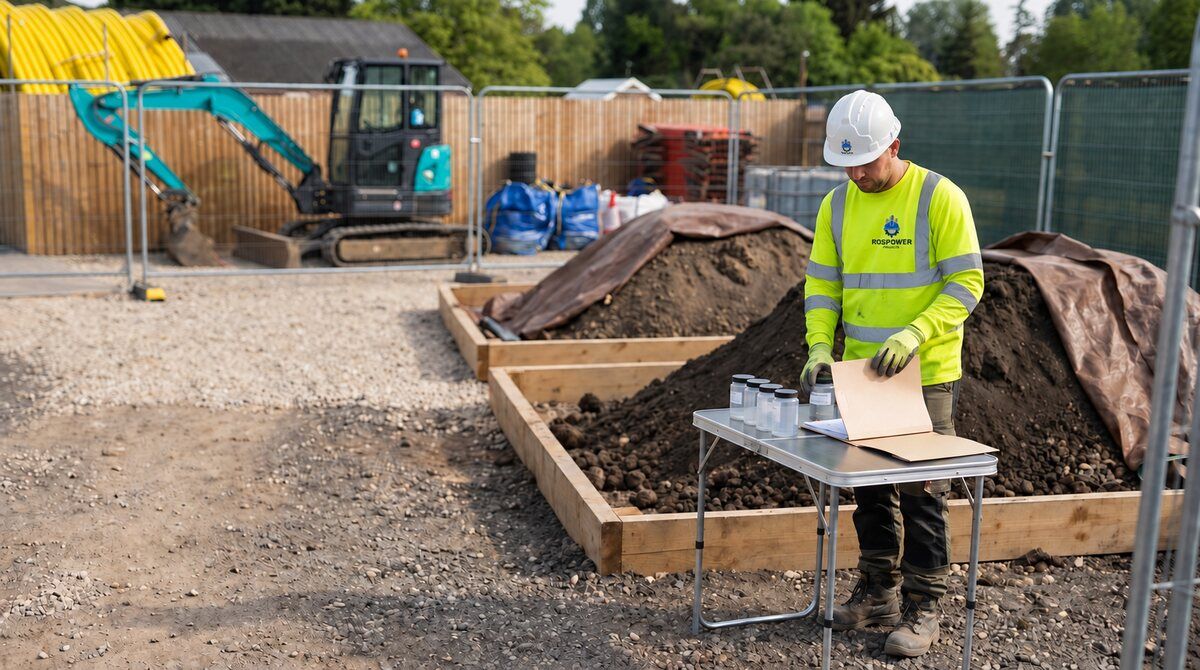
An excavator bucket does not tell you what legal route applies to the material in it. Some excavated material may remain in use on the site under the project arrangements; other material may be waste that needs assessment, classification and a lawful route to recovery or disposal. If a load is called “clean spoil” without evidence, the description can be commercially neat and technically wrong.
This workflow focuses on construction and excavation projects in England. Waste rules and regulator guidance differ across the UK, so use the relevant nation’s current guidance for work in Wales, Scotland or Northern Ireland. It is a project-planning guide, not a substitute for a competent waste specialist’s assessment of a particular material.
Start by asking whether the material is waste
Before choosing a code or booking a tipper, establish what the project intends to do with the material and whether it is waste at all. The waste duty-of-care code of practice defines waste by reference to whether a substance or object is discarded, intended to be discarded or required to be discarded. It also says the answer is case-specific.
That means two poor shortcuts need to be avoided. Do not assume that every tonne excavated is automatically waste, and do not assume that calling soil “reusable” makes it a product. Where material is intended for use elsewhere or is moved off the excavation footprint, record the proposed use, its technical suitability, the receiver’s requirements and the applicable legal route. If the status is uncertain, get advice before the material is moved.
Name the people responsible for preparing and approving the evidence. The person whose activities produce the waste has an important role, but project contracts, site control and waste arrangements can involve more than one party. The client, principal contractor, earthworks contractor, environmental consultant, carrier and receiving site should know who is supplying each decision and record.
Build the evidence before assigning a code
Separate the material into defensible lots using what is known about its origin, site history, depth, construction phase and visible characteristics. Keep suspect or materially different loads apart until their status and classification are understood. Mixing material can make it harder to describe and manage accurately.
Collect the information a competent waste assessor will need: historical site use, environmental reports, ground investigation data, source area, excavation depth, process that produced the material, field observations and any testing already completed. Agree whether further sampling or assessment is needed and who is competent to interpret it. A laboratory result by itself does not decide the waste code or prove the destination may accept the load.
The Environment Agency’s WM3 waste classification guidance is the technical reference for assessing and classifying waste in England. The Agency’s construction and demolition waste guide summarises common codes, including soil and stones. Use the summary to find the relevant pathway, not as permission to select a code by appearance. For hazardous waste, follow the assessment method and seek competent support where the chemistry or history is uncertain.
Do not use landfill waste acceptance criteria (WAC) results as a substitute for waste classification. GOV.UK’s waste classification responsibilities explicitly say WAC results must not be used for that purpose. Classification describes the waste and its hazard status; landfill characterisation and acceptance are separate later decisions for the destination and applicable controls.
Confirm the receiving route before loading
Once status and classification have been assessed, ask the proposed receiving site to confirm in writing that it can accept the described material, code, quantity, physical condition and expected delivery arrangement. Check that the operator’s environmental permit or registered exemption covers the relevant waste and activity. A generic statement that a site “takes soil” is not enough to evidence acceptance of a specific load.
Also identify what happens if the destination rejects a load, the material differs from the assessment, or the carrier arrives outside the agreed window. The contract should make clear who is contacted, where the load can remain safely, who authorises any alternative route and how the additional cost is handled. Do not let a driver select an unverified alternative tip simply to keep the truck moving.
Before collection, check the carrier, broker or dealer’s relevant registration and retain a record of the check. Verify the receiving operator and the waste type against the Environment Agency’s public records. A registered carrier does not by itself prove that the destination is permitted to accept the load; those are separate checks.
Prepare the right transfer record
For non-hazardous waste transferred to another holder, prepare a waste transfer note or other document containing the required information, and have the parties complete the relevant details. A season ticket may suit repeated transfers of the same type of non-hazardous waste with the same carrier, but it should not be treated as a blanket note for changing material, codes or arrangements. GOV.UK explains the waste transfer note requirements, including the two-year record period. The duty-of-care code describes the different retention period for hazardous consignment notes and notes that consignee rules differ.
Hazardous waste movements in England use a consignment note and additional requirements apply. Do not mark a transfer as non-hazardous to avoid that process. GOV.UK’s duty-of-care code describes the need for an accurate description and lists the information that supports safe handling, including classification, quantity, nature, transfer details and the identities and authorisations of the parties. It sets a three-year retention period for hazardous consignment notes for waste holders, with different rules for consignees.
The written description should travel with the load information and match the material that was assessed. Include the source area and process where these help identify the waste, quantities, physical state, relevant hazards, carrier details, destination and any handling constraints. Keep the classification rationale, supporting reports, approvals and check results together with the transfer record. If a load is rejected or an assumption changes, update the record and resolve the classification and destination before dispatching it again.
For a season ticket, the current holder, carrier and waste type must stay the same. Keep a schedule of each transfer’s date, time, quantity and collection site where needed, and retain the ticket and schedule for two years after the last transfer. The transfer description must also include the relevant signatures and waste-hierarchy declaration, not just a load reference. Check the linked requirements when preparing the record.
Give the waste adviser a useful request
When commissioning a waste adviser or speaking with a receiving operator, send a concise evidence pack rather than asking only “what code is this soil?” Include:
- the site location, history and planned excavation areas;
- ground investigation and environmental reports, with report dates and limitations;
- excavation depths, proposed stockpile areas and any material segregation plan;
- field observations and available analytical results, linked to sample locations;
- the intended use, recovery or disposal route and the receiver’s requirements;
- the proposed carrier and destination, including relevant authorisation details;
- the transfer paperwork and who will sign, retain and reconcile it.
Ask the adviser to identify missing information, the assessment method and assumptions, the classification decision, any controls on segregation or movement, and the limits of their conclusion. Ask the destination operator to confirm its own acceptance requirements and permitted route. Those are related decisions, but they are not interchangeable.
Check the record before the wagon leaves
At the load-out hold point, match the material in the vehicle to the assessed lot and transfer description. Confirm the current code and hazard status, destination acceptance, carrier authority, correct note, quantity and any required site controls. Keep the loading reference tied to the excavation area so a later weighbridge ticket can be reconciled with the source and receiving evidence.
If the material, route or paperwork does not match, pause the movement. Resolve the difference with the responsible waste adviser and receiver before release. A completed form is not a substitute for an accurate classification or an authorised destination.
The earthworks cut and fill calculator can help with early volume and load estimates, but it cannot determine whether material is waste, assign a classification or confirm a tip can accept it. Keep that distinction clear when pricing the earthworks package and planning disposal or recovery.
If a site has uncertain spoil quantities, classification or receiving arrangements, resolve those decisions before fixing the haulage allowance. See our groundworks handover guide or contact Rospower Projects to discuss a civil engineering package.
Connor Lyons is the commercial director at Rospower Projects and a Member of the Royal Institution of Chartered Surveyors. Read more about the team on our about page or contact us to discuss an upcoming project.
Related articles

HGV yard tender brief: make contractor quotes comparable
A practical HGV yard tender brief covering design inputs, operating needs, drainage, live access, quantities, exclusions and unresolved decisions.
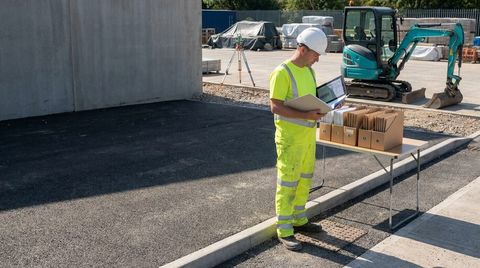
Groundworks handover pack: what belongs in it
A groundworks handover pack should connect as-built drawings, surveys, tests, approvals and changes to the completed work. Here is what to agree and collect.
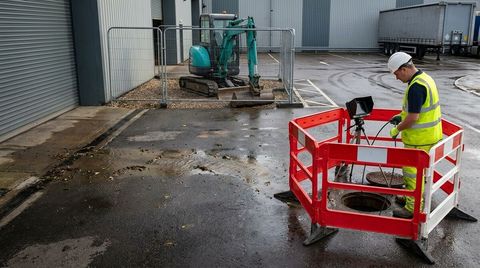
Drainage CCTV surveys: write a brief that produces usable evidence
How to brief a commercial drainage CCTV survey so the footage, coding, route plan, limitations and defect schedule support a repair decision.