Groundworks handover pack: what belongs in it
A groundworks handover pack should connect as-built drawings, surveys, tests, approvals and changes to the completed work. Here is what to agree and collect.
By Connor Lyons, Commercial director, MRICS
Generated by your browser's built-in AI. May not be fully accurate.
A groundworks handover pack should let somebody who was not on site understand what was built, where it was built, what controlled the work and how acceptance was recorded. A folder of delivery tickets, photographs and test certificates does not achieve that by itself. The value comes from the connections between the records.
Those connections are easiest to build while the work is live. If the first serious review happens near practical completion, the team is trying to reconstruct buried drainage, formation treatments and service routes after the evidence has disappeared below concrete, asphalt or backfill.
The right starting point is an agreed deliverables schedule. It should identify what the contract requires, who produces each item, the format and naming rule, when it is reviewed and what acceptance means. The exact contents remain project specific, but a useful groundworks pack normally draws from the groups below.
Start with the scope and acceptance route
Before creating folders, define the package boundary. Does the groundworks handover include earthworks, drainage, utilities, concrete slabs, kerbs, surfacing, landscaping and temporary works close-out, or only part of that scope? Record interfaces where another contractor owns the final connection, commissioning result or drawing.
Then identify the documents that controlled construction:
- contract drawings and specifications, with their accepted revisions;
- approved technical submissions and material selections;
- inspection and test plans, method statements and permits where relevant;
- designer responses, instructions and accepted changes;
- employer, principal contractor or adopting authority requirements;
- the agreed file format, coordinate system, datum and naming convention.
Our groundworks inspection and test plan builder can turn those requirements into activity-level checks before work begins. Its purpose is not to invent acceptance criteria. It creates a working structure that points each inspection and record back to the controlled project information.
As-built drawings must describe the finished work
An as-built drawing is not the tender drawing saved under a new filename. It should show the installation as it exists after approved changes, site adjustments and final survey.
For groundworks, the useful drawing set commonly includes:
- drainage routes, chamber references, cover and invert levels, pipe sizes, flow direction, connections and outfalls;
- utility ducts, draw pits, marker systems, entry points, crossings and known spare capacity;
- foundation, slab, plinth and external-work geometry where the final position or level differs from the design;
- earthworks treatment areas, capping, stabilisation, geosynthetics and replaced unsuitable material where these records affect later work;
- kerbs, channels, gullies, attenuation, interceptors and other maintainable external assets;
- survey control, coordinate system, project datum and a clear status and revision.
The schedule and drawing should agree. A chamber labelled MH12 on a survey should not become SW12 in a test record unless the change is explained. Our manhole schedule checker checks references, connections and level arithmetic across a working drainage schedule. It does not replace the approved design or the final as-built survey.
For adoptable sewers, agree the handover requirements with the adopting water company rather than assuming a general list. Check the project agreement, required drawing and survey formats, inspection records and acceptance route before collecting the final pack.
Survey records need a location and a purpose
A spreadsheet of levels has limited value when it does not state the instrument control, datum, date, drawing zone or feature measured. Connect survey information to the same references used on drawings and inspection records.
The pack should distinguish between setting-out information, interim checks and the final as-built survey. Setting-out data shows what the team intended to construct. An interim survey shows a stage before covering. The final record shows what was actually installed. Keeping those purposes clear avoids presenting design coordinates as evidence of the finished position.
Where a level or position did not meet the stated requirement, include the resolution: correction, retest, revised design, accepted concession or other recorded disposition. A red result without the closing decision leaves the user unable to tell whether the work was rejected, repaired or accepted.
Test results need traceability, not volume
The relevant tests depend on the package and project specification. A groundworks pack may contain earthworks, compaction, concrete, drainage, welding, duct, pressure, electrical or commissioning evidence, but there is no universal list or test frequency that applies to every job.
For each required result, retain enough context to answer:
- what material, asset, layer, run or pour was tested;
- where the test took place;
- when it was carried out and by whom;
- which method, equipment and specification requirement applied;
- what result was obtained and what acceptance value controlled the decision;
- whether the result passed, failed or required review;
- what corrective action, retest or accepted disposition closed any failure.
This is why an inspection and test plan should name the record before the activity starts. The site team can then collect evidence against a defined location and stage instead of trying to sort anonymous certificates at the end.
Keep material evidence connected to the work
Delivery tickets prove that products arrived. They do not automatically show where those products were used or that the delivered item matched the accepted submission.
The handover index should connect relevant declarations, certificates, batch references and delivery information to the installed area. Concrete tickets should link to a pour record. Fill and sub-base deliveries should link to the location and layer. Drainage and utility products should link to the run or asset where traceability is required. Specialist products should retain installation, inspection and maintenance information appropriate to the project.
Do not fill the pack with every supplier brochure available. Keep information that explains, verifies or supports the finished asset and the client’s future obligations.
Record change as one continuous story
Groundworks encounter existing services, variable ground, access constraints and design interfaces that are not always resolved on the original drawings. The handover pack should show how an accepted change moved from issue to instruction, construction and final record.
A practical change trail connects:
- the site observation, RFI or design issue;
- the instruction or accepted technical response;
- any revised drawing, method or material approval;
- the inspection and test evidence for the changed work;
- the updated as-built drawing and asset schedule;
- the commercial record where the contract requires it.
An email stored in one person’s mailbox is not a reliable project record. Put the decision in the agreed system and make its relationship to the built work clear.
For higher-risk buildings in England, the legal information regime goes further. Building Safety Regulator guidance on the construction control plan requires the plan to explain how compliance evidence and as-built information will be collected. That process applies to the higher-risk building scope defined by the regime, not to every groundworks project, but it demonstrates the same practical principle: decide the evidence, responsibility and change control before construction produces it.
Separate the health and safety file from the wider handover pack
The CDM health and safety file is not a dumping ground for every project document. HSE guidance in Managing health and safety in construction explains that the file is required for projects involving more than one contractor and should contain information likely to be needed for health and safety during later work.
For a groundworks package, relevant information may include residual hazards, the location and marking of significant underground services, safe access for maintainable assets, unusual materials or structural principles and final as-built information needed for future construction. The same guidance says the file should not include items that will not help somebody plan later work, such as the construction phase plan, contractual documents or routine method statements.
The wider contractual handover pack can still include quality, commercial, commissioning and operation information outside that file. Keep the two purposes distinct, with cross-references where one controlled record belongs in both the project close-out and future safety information.
Build the index while work is live
A simple matrix is often enough. Give every deliverable an owner, due stage, review status and final location. Review it by area or work package at regular progress meetings.
Progressive close-out works better than an end-of-job document chase:
- close formation and earthworks evidence before the next layer hides it;
- update drainage records as each run and chamber is completed;
- connect concrete records to each pour while tickets and tests are current;
- close non-conformances before the responsible people leave the job;
- update as-built information after accepted changes rather than at the end;
- issue draft handover sections early enough for a useful review.
HSE’s construction administration guidance makes the same distinction between paperwork for its own sake and records that support practical control. The pack should be concise enough to use and complete enough to rely on.
A final groundworks handover check
Before submission, ask whether a competent person who did not build the job can follow the record without oral explanation.
- Is the package scope and document index clear?
- Do final drawings match the installed references, coordinates and levels?
- Can each inspection and test result be located on the work?
- Are failures, changes and concessions closed and cross-referenced?
- Are material records connected to the areas where they were incorporated?
- Are maintainable assets, access needs and residual hazards identified?
- Is the CDM health and safety file content separated from routine contractual records?
- Are superseded files controlled so the user can identify the accepted final issue?
The aim is not the largest handover folder. It is a connected record of the finished work that supports acceptance, operation, maintenance and any later construction.
Rospower Projects delivers groundworks, drainage and external works packages with the inspection, survey and close-out evidence agreed for the project. If a handover schedule needs to be made practical before work starts, use our work with us page or request a proposal to share the package information.
Connor Lyons is the commercial director at Rospower Projects and a chartered quantity surveyor. Read more about the team on our about page or contact Rospower Projects to discuss a groundworks package.
Related articles
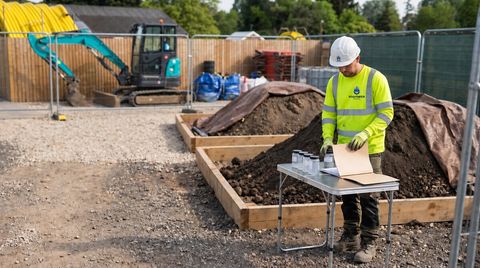
Excavated spoil: checks before it leaves site
An England-focused workflow for checking excavated material status, waste classification, destination acceptance, carrier authority and transfer records.
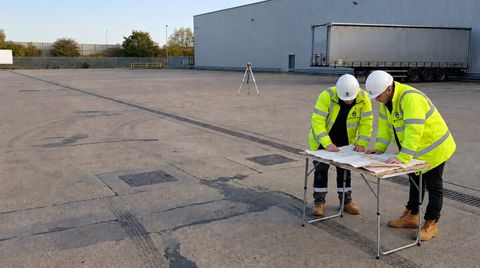
HGV yard tender brief: make contractor quotes comparable
A practical HGV yard tender brief covering design inputs, operating needs, drainage, live access, quantities, exclusions and unresolved decisions.
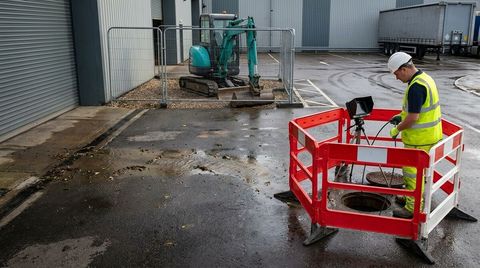
Drainage CCTV surveys: write a brief that produces usable evidence
How to brief a commercial drainage CCTV survey so the footage, coding, route plan, limitations and defect schedule support a repair decision.